September 5, 2026
Putting Grounds Maintenance in Your Body Corporate Long Term Maintenance Plan
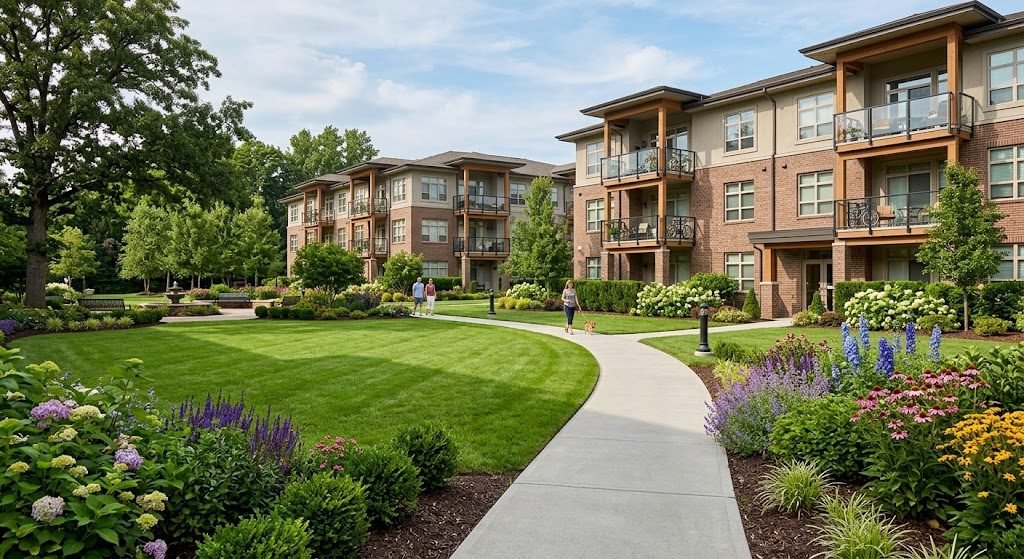
Ground maintenance rarely gets the attention it deserves at a body corporate meeting. Everyone talks about the roof. Then the cladding. Then the lift. The lawn gets a quick mention and someone says, “We will just allow for mowing.”
That is where the budget can start going wrong. If you manage body corporate and strata sites in Tauranga, your grounds should be considered as part of the wider maintenance picture.
The Unit Titles Act 2010 requires a body corporate to establish and regularly maintain a long-term maintenance plan. The standard plan must cover at least 10 years. Large unit title developments have additional requirements and must plan for at least 30 years. The trick is knowing what belongs in regular operating costs and what needs to be planned as future renewal.
What a Long Term Maintenance Plan Has to Cover
A long-term maintenance plan is not simply a list of things the committee might repair one day. Its purpose is to identify future maintenance requirements and estimate the costs involved. It also helps the body corporate plan its funds and make annual maintenance decisions.
Under the Unit Titles Regulations, the plan must cover common property, building elements and infrastructure. It can also include additional items if the body corporate decides to include them by ordinary resolution.
The regulations require the plan to state the estimated age and life expectancy of covered items and the estimated cost of maintenance and replacement. That makes grounds relevant when they form part of the common property and the maintenance decisions of the body corporate.
- For a standard body corporate, the plan must cover at least 10 years.
- For a large unit title development, the requirement is at least 30 years. A large development is one with 10 or more principal units. The 30-year requirement applies under section 157C of the Unit Titles Act.
The longer period does not mean you need to predict exactly what every hedge will look like in 2048. It means you need a sensible long-term view of the property’s maintenance and renewal needs.
Why Grounds Get Under Budgeted Every Single Time
Ground maintenance often gets squeezed out of long-term planning. Committee members frequently lump all lawn and garden work into annual operating budgets.
This oversight creates recurring budget shortfalls. While basic lawn mowing occurs regularly, outdoor assets inevitably degrade. Hedges reach end-of-life, timber retaining walls rot, irrigation systems fail and tree roots lift concrete curbing. When these expenses arrive without an established reserve fund, committees are forced to raise uncomfortable special levies on unit owners.
Operating Cost vs Capital Renewal
Accurate body corporate budgeting requires a clear distinction between daily operating expenses and capital renewal projects:
- Operating Expenses (Annual Budget): Recurring operational tasks like routine mowing, line trimming, weed control, seasonal flower replacement and green waste disposal. These services preserve existing conditions and repeat constantly.
- Capital Renewal (Long-Term Maintenance Fund): Periodic capital expenditure aimed at replacing or restoring physical assets. This includes complete lawn re-turfing, boundary hedge replacements, garden bed overhauls, tree removals and retaining wall repairs.
The Grounds Items That Belong in a Long Plan
There is no universal statutory replacement cycle for every lawn, hedge, tree or irrigation component.
The Unit Titles Regulations instead require the plan to state the estimated age and life expectancy of covered items and their estimated maintenance and replacement costs. Those estimates should therefore reflect the actual property and its assets.
- Mature tree management & removal (10–15 Year Cycle): Large trees require scheduled arborist pruning, canopy thinning, or eventual removal when root systems encroach on nearby foundations or drainage.
- Boundary hedge replacement (15–20 Year Cycle): Established shelter belts eventually become leggy, diseased or overgrown beyond recovery. Thus, it requires total removal and replanting.
- Garden bed overhauls & soil rejuvenation (7–10 Year Cycle): Periodic replacement of depleted topsoil, geotextile weed matting, retaining bark and declining shrubbery.
- Irrigation system overhauls (10–12 Year Cycle): Replacement of automated solenoid valves, controller units, underground lines and pop-up sprinkler heads.
- Edge retaining & concrete curbing (15–20 Year Cycle): Repairing timber garden borders, broken lawn edging or cracked concrete borders along common driveways.
- Storm damage emergency reserves (Ongoing Allocation): Maintaining a dedicated capital reserve to handle heavy weather cleanup across retirement villages and commercial landlord properties.
A useful grounds schedule can look like this:
| Grounds item | Planning approach |
|---|---|
| Lawns | Treat routine mowing and care as an annual operating cost. |
| Hedge | Record condition and expected renewal need based on the actual hedge. |
| Mature trees | Record condition, expected remaining life and potential removal or replacement needs. |
| Garden beds | Record current condition and any anticipated major rework. |
| Irrigation controllers | Record installation age, condition and expected replacement requirement. |
Build a Per Unit Figure the Committee Can Understand
Presenting long-term maintenance budgets to unit owners requires clear, accessible data. Large annual dollar figures often provoke pushback at annual general meetings.
Follow this practical budgeting framework:
- Map actual maintained areas: Measure common property grounds accurately rather than relying on total title block size.
- Separate spatial boundaries: Differentiate common areas from private, exclusive-use courtyards.
- Break down the figures: Convert total annual landscape expenses into clear, digestible metrics.
Example: A $15,000 annual grounds maintenance and LTMP provision across a 12-unit residential complex equates to $1,250 per unit annually. Frame this to owners as $24.03 per unit per week. Presenting costs as a small weekly figure makes budget approvals easier during AGM voting.
Fixed Annual Contracts Against Per-Visit Charging
Variable per-visit charging models introduce unexpected budget swings. A wet spring might require weekly mows. As a result, your annual operating allowance may finish before autumn arrives.
To maintain budget stability, you should opt for a fixed-price annual contract. This structure delivers distinct advantages:
- Predictable cash flow: The body corporate pays equal monthly installments.
- Comprehensive seasonal care: Professional contractors adjust visit frequencies automatically. For example: mow more frequently during peak summer growth and focus on garden bed care during winter.
- Clear scope boundaries: Fixed schedules clearly define routine operational maintenance. This makes it easy to identify when genuine capital renewal work needs to be funded through the LTMP.
When comparing commercial tenders across shopping centres or residential complexes, confirm whether quotes represent fixed annual agreements or estimated variable visits.
What to Hand Your Body Corporate Manager
A good grounds maintenance plan should be easy for the manager to use. Give them a practical package containing:
1. Scope of works
List exactly what the contractor maintains.
2. Site plan
Mark the maintained common areas. Show exclusive-use areas separately where relevant.
3. Seasonal visit schedule
Explain how the maintenance programme changes through the year.
4. Fixed annual price
Give the expected annual cost for the agreed scope.
5. Grounds renewal list
Record the longer-term items and the estimated life or renewal timing based on the actual property.
At Prowess Mowing, we prepare complete landscape scopes, spatial site maps, and fixed annual figures for Bay of Plenty bodies corporate free of charge, giving your committee the exact data needed for your next AGM.
Frequently Asked Questions
Does grounds maintenance belong in a body corporate long-term maintenance plan?
Grounds should be considered alongside the body’s wider maintenance obligations, particularly where grounds form part of common property or the body corporate has resolved to include additional items. Routine mowing is generally an operating cost. The actual treatment should reflect the property and applicable requirements.
How many years must a long-term maintenance plan cover?
A standard body corporate long-term maintenance plan must cover at least 10 years from the date of the plan or its last review. A large unit title development has a longer requirement of at least 30 years.
Who decides the ground budget in a body corporate?
The body corporate is responsible for its maintenance and financial decisions. The committee or body corporate manager may prepare budgets and recommendations depending on the body’s governance arrangements. The final decision depends on the applicable Unit Titles Act requirements, resolutions and delegation arrangements.
Is mowing an operating expense or a capital item?
Routine mowing is generally an operating expense because it is recurring maintenance. Major renewal or replacement work is different and may need to be included in long-term maintenance planning. The correct treatment depends on the nature of the work and the body’s accounting arrangements.
Can a body corporate change grounds contractors mid-year?
A body corporate can generally change contractors. But the process depends on its existing service contract, procurement arrangements and governance requirements. Check the contract before ending an existing service. The body corporate should also make sure the replacement contractor understands the site’s scope, access requirements and health and safety arrangements before taking over.
Make Grounds Part of the Plan, Not an Afterthought
Your body corporate has a long-term maintenance plan because the property has long-term maintenance needs. The grounds are part of that picture. The lawn may need attention every week.
The hedge may need renewal years from now. The mature tree may need assessment before it reaches the end of its useful life. Planning for these items does not mean spending money before it is needed. It means knowing what is coming.
For body corporate sites across Tauranga, Mount Maunganui and Papamoa, Prowess Mowing can help turn that into a practical maintenance plan.
We can prepare a scope of works, site plan and fixed annual price for your body corporate site, ready to take to your next annual general meeting.
Ask for a site scope and fixed price and we will discuss your property with you.
This article is general information and is not legal or financial advice. Your body corporate manager should confirm the requirements that apply to your scheme.