September 5, 2026
Who Mows the Lawn at a Rental Property in New Zealand?
If you manage rental properties, lawn mowing sounds simple. Until the tenant says it is the landlord’s job. Then the landlord says it is the tenant’s job. Then the grass is knee-high and everyone is asking who was supposed to organise the mower.
So, who is responsible for mowing lawns in a rental property in NZ?
In a standard tenancy, the tenant is generally responsible for keeping the property reasonably clean and tidy. Tenancy Services specifically says this includes mowing lawns and weeding gardens. The landlord remains responsible for maintaining the premises and is usually responsible for trees, shrubs and hedges.
That distinction matters if you manage property management portfolios across Tauranga and the Bay of Plenty.
The Default Position Under the Residential Tenancies Act
Who is supposed to push the mower on tenancy inspection day? It is one of the most frequent friction points across residential property management portfolios in the Bay of Plenty.
Under the Residential Tenancies Act 1986, responsibilities are split between basic day-to-day upkeep and major property maintenance.
- Section 40(1)(e) requires the tenant to keep the premises “reasonably clean and tidy”. It generally covers routine lawn mowing and catching weeds.
- Section 45(1) obliges the landlord to maintain the premises in a reasonable state of repair. While routine lawn care defaults to the tenant, landlords and property managers can structure tenancy agreements to handle grounds maintenance directly. Thus, it avoids disputes and preserves curb appeal.
What Does “Reasonably Clean and Tidy” Actually Mean for a Lawn?
The phrase “reasonably clean and tidy” creates grey areas if expectations are not established early.
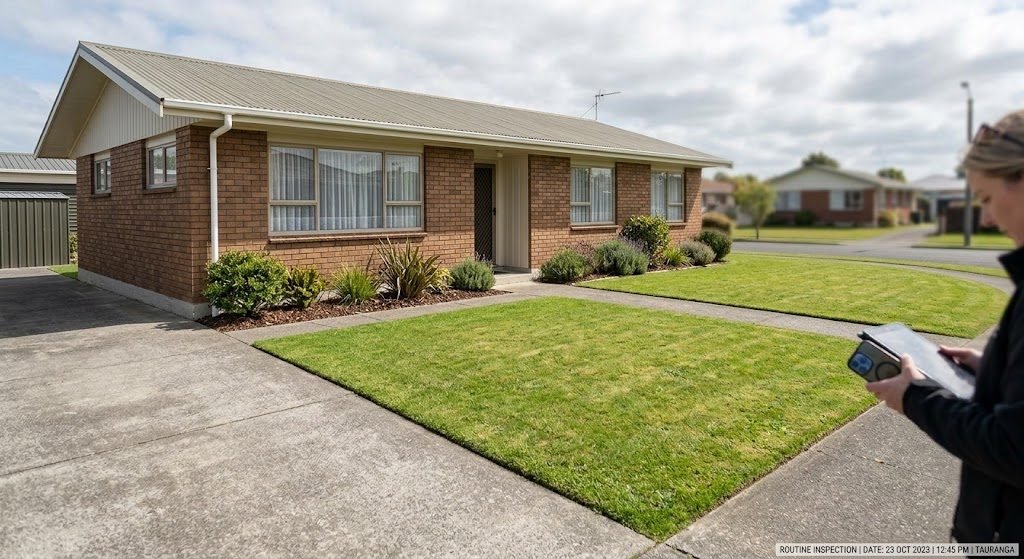
Here is how standard legal interpretations split lawn and garden tasks:
Tenant duties:
- A tenant might normally be expected to mow an established lawn.
- They would not normally be expected to remove a mature tree.
- They would not normally be responsible for major hedge reduction.
- They would not normally be expected to redesign an established garden.
Landlord duties:
- Pruning major trees
- Trimming high boundary hedges
- Maintaining structural retaining walls
- Carrying out complete garden overhauls.
Who supplies the mower?
There is no point writing “tenant responsible for mowing” if nobody has considered how the mowing will actually happen. If the owner wants a contractor to handle the lawn, make that arrangement clear in writing.
Tenancy Services recommends putting an agreement for the landlord to mow the lawns into the tenancy agreement or another written document signed by the landlord and tenants.
Five Situations Where the Landlord Should Simply Take It Over
Sometimes the easiest answer is to stop debating who should push the mower.
1. The property has shared common areas
A tenant cannot reasonably be responsible for mowing a common area shared by several households. This often happens at multi-unit rental properties.
If nobody clearly owns the mowing job, the grass will eventually tell you. For body corporate and strata sites, a planned contractor arrangement can make more sense than relying on individual occupants.
2. The lawn includes shared access areas
Shared driveways, communal lawns and other areas used by several people can create confusion. A contractor schedule gives the property manager one clear responsibility instead of several tenants trying to work out who should mow what.
3. The section is too large or difficult for domestic equipment
A steep or terraced section can create practical and safety issues. A tenant may technically have lawn care responsibilities but still lack suitable equipment or a safe way to complete the work.
The landlord should consider the property’s actual requirements rather than assuming a domestic mower will work everywhere.
4. It is a short-term or furnished tenancy
A tenant staying for a short period may have little reason to own a mower. The same applies to furnished properties where the owner expects a higher level of presentation.
A regular contractor can keep the section maintained without making the tenant responsible for organising equipment.
5. The garden is part of the property’s value
Some rental properties are marketed because they have established gardens, hedges and landscaped grounds. Those features need ongoing care.
If the owner wants the garden maintained to a particular standard, it is usually better to make the arrangement explicit and clear.
How to Word It in the Tenancy Agreement
If the landlord is arranging lawn mowing, say exactly what is included.
For example:
“The landlord will arrange lawn mowing at the property on a regular schedule. The tenant remains responsible for keeping the property reasonably clean and tidy and for routine garden care not included in the mowing service.”
That is only a sample clause. Your actual tenancy agreement should reflect the arrangement you have agreed with the tenant. You can also specify:
- How often the lawn will be mowed.
- Which months the service covers.
- Whether edging is included.
- Whether green waste is removed.
- What happens if access is unavailable.
- Who the tenant should contact about missed visits.
Tenancy Services recommends putting agreed lawn and garden arrangements in writing and having them signed by both landlord and tenant.
What It Costs to Include Mowing in the Rent
If you manage multiple properties, look at lawn mowing as an annual property expense rather than a random callout. Start with the annual cost of the mowing schedule. Then divide that cost across the rental period.
For example, if mowing is provided throughout the year, you can convert the annual service cost into an equivalent weekly amount for budgeting purposes.
The important thing is to use your actual contractor price. Do not copy a generic internet figure. Your property’s lawn size, access, mowing frequency and green waste requirements all affect the cost.
There is another benefit that is easy to miss. A maintained section photographs better. That matters when you advertise the property again.
It also makes routine inspections easier because you are less likely to find a neglected section that suddenly needs a catch-up job. For landlords working with real estate agencies, a planned mowing schedule can also make presentation more consistent across properties.
End Final Inspection Disputes Before They Start
Disputes over bond refunds frequently stem from overgrown sections at the end of a tenancy. To streamline final inspections:
- Document initial conditions: Take clear, high-resolution photos of lawns, hedges and garden borders during the initial property inspection.
- Maintain service records: A contractor visit log offers clear proof of regular maintenance. It carries far more weight in tenancy tribunal discussions than casual recollections.
- Understand wear and tear: Normal seasonal grass browning during hot summer months counts as fair wear and tear. Unchecked knee-high grass, uncut weeds or dead turf caused by unaddressed tenant vehicles do not.
Running Lawn Mowing Across a Whole Portfolio
Managing dozens of individual lawn arrangements across real estate agencies consumes valuable administrative time. Consolidating your residential portfolio under a single professional contractor streamlines property management operations:
- Single monthly invoice: Replaces messy individual tenant re-bills.
- Consistent site reporting: Receive automated site updates and photo logs after every visit.
- Dedicated account contact: Resolves access issues or special requests through one reliable point of contact.
Frequently Asked Questions
Does a tenant have to mow the lawn in New Zealand?
In a standard tenancy, the tenant is generally responsible for keeping the rental reasonably clean and tidy. Tenancy Services specifically says this includes mowing lawns and weeding gardens. The tenancy agreement can set out a different arrangement, such as the landlord arranging regular mowing. Any such arrangement should be clearly recorded in writing.
Can a landlord charge the tenant for lawn mowing?
The answer depends on the tenancy arrangement and the reason for the charge. Routine lawn mowing is generally a tenant responsibility unless the landlord has agreed to provide the service. A landlord should not simply impose a new charge without checking the tenancy agreement and applicable tenancy rules.
Who mows the lawn in a multi-unit rental?
It depends on whether the lawn is part of the tenant’s exclusive area or shared property. A tenant will generally handle routine care of the area they rent. Shared common areas are different. They should have a clearly assigned maintenance responsibility rather than relying on individual tenants to organise the work.
Can a landlord deduct lawn mowing from the bond?
Do not assume that a lawn mowing cost can automatically be deducted from the bond. Bond payments and claims are governed by the Residential Tenancies Act. The correct process depends on the circumstances and whether money is actually owed. Check the current Tenancy Services process before making or agreeing to a deduction.
What can I do if a tenant lets the lawn get out of control?
Start by checking the tenancy agreement and the tenant’s responsibilities. The tenant is generally responsible for keeping the rental reasonably clean and tidy, including mowing the lawn. Raise the issue early and keep the communication in writing. If the problem continues, use the appropriate tenancy process rather than simply arranging work and assuming the tenant must pay.
Make Lawn Maintenance One Less Thing to Chase
If you manage rentals across Tauranga, Mount Maunganui, Papamoa or the wider Bay of Plenty, Prowess Mowing can organise regular mowing across your portfolio.
Instead of chasing individual tenants or booking one-off cuts, you can put suitable properties on a planned schedule. Want a simpler way to manage rental lawns? Set up a mowing schedule with Prowess Mowing and ask us for a portfolio quote.
This article is general information and is not legal advice. Check Tenancy Services or your own adviser for your situation.